

| Read Log, 2025 | ||||||
| By Tal Cohen | Friday, 27 March 2026 | |||||
Fiction Finished reading the James Bond series. Specifically, read You Only Live Twice, The Man with the Golden Gun, For Your Eyes Only, and Octopussy and The Living Daylights. In You Only Live Twice, Fleming’s racism (or just cultural snobbism) is directed at the Japanese, who seem to be happily promoting suicides as a solution to over-population. Tiger, chief of the Japanese secret service, has perfect English, having lived in England for a while, but Fleming couldn’t resist making him say things like “Please to examine this,” a prototypical Japanese grammar mistake. Bond’s “education” about the Japanese ways (what most of the first half of the book is spent on) includes a whirlwind tour of everything from visiting whorehouses to writing haiku, from a fugu restaurant to a school for ninjas. It’s a parade of clichés about Japan. The plot itself is outlandish and stupid. The Japanese allow a foreign botanist to set up a garden of poisonous plants (and lakes teeming with piranha), and when it becomes a popular suicide site, send another foreigner (Bond) to kill him. The botanist, unsurprisingly, turns out to be Ernst Stavro Blofeld, and when he and Irma stop by chance to speak just near where Bond is hiding, they reveal their plan to him through their conversation. Enid Blyton wrote more captivating plots. The only interesting point in the next volume, The Man with the Golden Gun, is that early in the book, “M.” is explicitly named (Sir Miles Messervy, in case you were wondering). The last two volumes, For Your Eyes Only and Octopussy and The Living Daylights, are in fact collections of short stories. These stories are actually better and more relatable than most of the novels, although some of them (in particular the last one, “Agent 007 in New York”) are mostly for laughs. One story, “Quantum of Solace” (in Eyes Only) is really good, and perhaps the best in the entire series. Wonderfully written. Alas, it is not a James Bond story; it is a story told to James Bond, and it has nothing to do with the Secret Service and secret agent work, other than to show Bond the role of fate in people’s life. And if there’s any snobbery in the writing of these stories, it’s focused mostly on America and the Americans. Finished Zilpha Keatley Snyder’s Green Sky fantasy series with the third volume, Until the Celebration. (See Read Log 2024 for some background.) Interestingly, when the good wins and the two kingdoms are reunited (the “rejoyning”), the author presents many interesting problems that would surface in the reuniting of Germany, twelve years after this book was published. (Of course, the problems are presented from a child’s point-of-view here.) A very different fantasy series is Howl’s Castle series by Diana Wynne Jones: Howl’s Moving Castle, Castle in the Air, and House of Many Ways. Extremely enjoyable; the introduction to the Folio Society edition, by Marcus Sedgwick, claims Wynne Jones showed the way to Rowling, who refused to ever acknowledge it; maybe it did. The first book is very different from the Miyazaki movie based on it, and is actually much better. The magic kingdom really is magical (no trains for example), there is no war involved, and no strange flying contraptions... The other two books are also highly enjoyable (and Wynne Jones seems to predict the depiction of the genie in Disney’s Aladdin, released two years after Castle in the Air; but movies take a long time to make, so there was likely no influence.) More fantasy: The Dragon and The George by Gordon R. Dickson. Ostensibly, this book is the source material for the lovely 1982 animated film The Flight of Dragons. In actual fact, little more than the character names survived---but unlike in the case of Howl’s Moving Castle, here the movie is in fact far better than the book. (The movie is also based on a different and much more entertaining book, called The Flight of Dragons; see my 2013 read log.) Apparently, after publishing this book, Dickson switched to writing mostly sequels for it. I won’t be seeking out any of them. In the liminal space between fiction and myth, Colm Tóibín’s House of Names is a retelling of Aeschylus’s Oresteia. An interesting take, but perhaps nothing to write home about. And in the liminal space between fiction and history, I’ve read Colleen McCullogh’s The Grass Crown, second volume in the Masters of Rome series. McCullogh’s writing is captivating, but what I really enjoy, as in the case of the first volume, is finding where the line passes between fiction and history. For example, the (real!) story of King Mithridates VI Eupator of Pontus would make a brilliant series by itself; it is sad that we know so little about those histories. The King claimed he rendered himself “immune to every kind of poison known to men” (predating the Dread Pirate Roberts), and this is apparently historically correct; “Mithridatism” is the name of the practice of consuming small amounts of poison to develop immunities. Another interesting historic fact is the scene (embellished here for with fictional details, naturally) where the King gives back the Roman Proconsul Aquillius his gold---by pouring melted gold down his throat. This was published in 1991, five years before A Game of Thrones describes how Viserys Targaryen was similarly killed by Drogo; and, as noted, it is based on an actual historic event. Plus, it seems like the description here is better written than Martin’s. Not that the writing is perfect, obviously. The character of Marcus Livius Drusus was vilified in the first volume (The First Man in Rome), where he was described as a strict prick who forced his sister to marry a fool against her wishes. In this volume, he is converted into a saint. Beyond regretting what he did to his sister (and receiving her forgiveness; she’s another saint), he also accepts his adultering mother back into the family. But his biased presentation as a saint is particularly evident in the way he regards his support for the enfranchisement of all Italians; he knew that the Italians were swearing an oath to become his clients once this law is passed (which would make him the strongest man in Rome), but he views this as a completely secondary matter, it’s almost not on his mind, compared to the “ethical” reasons for his pursuit of this legislation. That is not a realistic representation. More historic fiction, perhaps the grand-daddy of them all: I, Claudius (or more accurately, I, Claudius: From the Autobiography of Tiberius Claudius, Born B.C. X, Murdered and Deified by A.D. LIV, and its sequel Claudius the God and his Wife Messalina: The Troublesome Reign of Tiberius Claudius Caesar, Emperor of the Romans (Born 10 B.C., Died A.D. 54), as Described by Himself; also His Murder at the Hands of the Notorius Agrippina (Mother of the Emperor Nero) and His Subsequent Deification, as Described by Others (let’s just call it Claudius the God), both by Robert Graves. Fun read. For example, here’s what the orations of generals to soldiers before battle really were, according to Pollio (in I, Claudius):
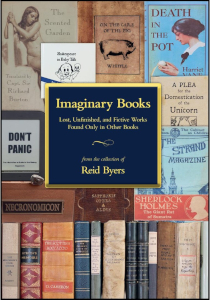
According to Graves, Livia (Augustus’s wife) killed more people than a clutter of black widows on a rampage. Which makes things that much more fun to read. The second volume is also highly enjoyable, although it suffers from being based mostly on a single historical source, Flavius Josephus. Reading this book encouraged me to read about the history of King Herod; more on that below, when I discuss nonfiction. In both McCullogh’s and Graves’s writing, it is sometimes amusing to discover historic anachronisms. For example, McCullogh (in The Grass Crown) has a Roman lady pretend that her dream lover was “King Odysseus of Ithaca”; but a Roman lady would actually talk about Ulysses. Graves, in Claudius the God, discusses a miscalculation, where “the sum had been written in figures, not in words,” leading to a confusion between fifty thousand and half a million.But the Romans did not use the decimal system; 50,000 was written as ’’D̅”, 500,000 as ’’L̅”, and the confusion described is highly unlikely. Read William Faulkner’s Absalom, Absalom!, first in the original and then (because it is a book that must be read twice) in Amatsyah Porat’s dated, but still very good, Hebrew translation. I feel underqualified to really write about this masterpiece. Yes, it is far from an easy read, but once penetrated, it is hugely gratifying. (As I am writing this, in early 2026, I am reading select criticism of this book, in the Norton Critical Edition.) Also read: Spanish Grace (Hebrew) by A. B. Yehoshua; Voice Lessons (Hebrew) by Dorit Rabinyan; The Windsor Knot by S. J. Bennett; Witch (חרשתא; original Young-Adult Jewish fantasy, in Hebrew) by Judith Kagan; V for Vendetta by Alan Moore and David Lloyd, a re-read; Le Château des Carpathes by Jules Verne (Hebrew translation); and one quaint and amusing work of science fiction, The Good Soldier by my friend Nir Yaniv. History and Classics Read Prof. Jonatan Meir’s four-volume research into Joseph Perl’s Revealer of Secrets (מגלה טמירין). This includes the text itself, and its sequel, Sefer Bochen Zadik, both heavily annotated; one volume of appendices; and finally a volume titled Imagined Hasidism: The Anti-Hasidic Writings of Joseph Perl, which presents Meir’s extensive research on the subject. (All in Hebrew.) All excellent stuff. Perl’s ironic writing is delectable, and Meir’s research is enlightening. It is a tragedy that so few in the modern Hebrew-speaking world are not familiar with the true history of early Hasidism. Read four volumes in the Loeb edition of Plutarch’s Lives: volume III Pericles and Fabius Maximus, Nicias and Crassus through volume VI, Dion and Brutus, Timoleon and Aemilius Paulus. All translated by Bernadotte Perrin. I always enjoy the random anecdotes and surprising facts in these books. In some cases, the people themselves are fascinating, as in the case of Alcibiades (in volume IV) and, after I read a fictionalized version of his life in McCullogh’s work, Sulla (also in volume IV). Two modern works of history, both in Hebrew, one being a university textbook---Moshe Amit’s A History of the Roman Empire (the fourth and last volume in the series of classical history textbooks from The Hebrew University in Jerusalem), and the other a research monograph, Agrippa I: The Last King of Judea, by Daniel R. Schwartz. It was mostly Graves who drove me into reading the latter, having realized that I know so little about that period. That said, it seems like Agrippa’s role in the life of Claudius was not as meaningful as Graves portrays it to be. Homer and His Iliad by Robin Lane Fox was rather disappointing. Lane Fox’s tone is always overly certain, leaving no place for doubt, even in issues like The Homeric Question. There were many red flags throughout the text. Apparently Lane Fox feels a need to continually justify how great the Iliad is, comparing it repeatedly to the epic of Manas, to Beuwolf, and to Gilgamesh, always for the sake of glorifying the Iliad, as if this is some sort of a contest. There’s a joke in bad taste about Black Lives Matter, and when discussing how Homer gave fair treatment to women, the text itself (Chapter 29) is painfully sexist. Also read Epigrams from the Greek Anthologies, translated and edited by Aharon Shabtai. Literary Theory, Translation, and Linguistics Beginning Theory: An Introduction to Literary and Cultural Theory, Fourth Edition by Peter Barry is an excellent overview of theories in literature. I should have read this much earlier, when beginning my studies. The book clarifies not only the different theories and their terminology (and does a very decent job at that), but also the operating forces behind it all: the history of the development of these theories, the academic background forcing researches to keep coming up with new theories just for the sake of playing the game, how personalities affected things (e.g., Derrida), etc. Chapter 14, “A history in ten events,” is downright brilliant and provides fantastic context. Russian Formalist Criticism: Four Essays, Second Edition, translated and with an Introduction by Lee T. Lemon and Marion J. Reis, and with a new introduction by Gary Saul Morson. Morson writes that “A century after the Russian Formalist movement began [...] One could almost say that literary theory has evolved into a series of footnotes to Formalism.” While clearly an exaggeration, this does have a nugget of truth to it. Not an easy read (even though it’s just a short booklet), but rewarding nonetheless. 19 Ways of Looking at Wang Wei, with More Ways by Eliot Weinberger. Amusingly, I first read about this book when reading a book about software engineering. Over two dozen translations (to English mostly, but also to Spanish, German, and French) of one ancient Chinese poem, with a lot of insight into the process of translation, the history of translating Chinese poetry (basically, before and after Pound’s Cathay), and more. A very short (this was originally an article) and highly enjoyable book. How Dead Languages Work by Coulter H. George. One of these days I will learn Ancient Greek. You just wait. Miscellanea The Making of Karateka: Journals 1982-1985 and The Making of Prince of Persia: Journals 1985-1993, by Jordan Mechner. Fascinating to read how the home computer software industry looked like in those days. Karateka, the game, was the reason I got an Apple II (well, an Apple II clone) as my first computer. It’s hard to believe this was mostly a single person’s work. Mechner seems to have realized the importance of what he’s doing from an early stage: “The hell with writing fiction or directing movies. I’ve got a handle on something, and I think I have the right qualifications: computer programming, writing ability, and fanatical love of movies and music. As the new art forms emerge, I want to be there. Interactive movies... joystick controlled music... the possibilities are endless” (ellipses in the original). That said, I lost some of my appreciation for him after reading this journals. From the very beginning, he’s a Yale student but doesn’t bother to go to class; clearly coming from an affluent home and does not really appreciate it. While working for Brøderbund in California, Mechner meets Danny Gorlin and Doug Smith, the inventors of Choplifter and Load Runner, respectively; both amazing games from that era. Both programmers became young millionaires from their successful games; but while Gorlin was a modest person, Smith was boastful and show-offy. While neither had another major success in their careers, I was not surprised (yet still sad) to find out that Smith took his own life in 2014, aged 54. Interesting insight about game quality: Good games (a) give you control of your ship/car/man/whatever, so if it’s “hit” you know why; (b) give you a way to control your attacks (have a strategy); and (c) have two goals, primary (e.g., points) and secondary (e.g., clearing screens). The games that (in 1982...) had all three were the best sellers, like Pac-Man and Space Invaders. Many future games implemented a lot of this; like the difference between getting all points (e.g., finding all secrets in Doom) and winning the game. In 1989, “Lance had come into the office looking for me, looking glum. He’s just gotten a really high salary offer from some company in Mountain View, which Brøderbund probably won’t be able to compete with.” Some things never change. But it’s not that company from Mountain View, not in 1989... The Hundred-Page Machine Learning Book by Andriy Burkov. Something about machine learning and artificial intelligence, I hear there’s a chance this thing will catch on. The book is actually longer than a hundred pages, and this is presented as a “bonus”; it isn’t, it’s a sign of laziness, not being able to edit the text down to the proper size; the whole idea, for me, was something small enough that I could digest in my spare time. The book is highly technical (good!), but it is overly detailed in some places, and not nearly detailed enough where it really matters (e.g., gradient descent). Imaginary Books: Lost, Unfinished, and Fictive Works Found Only in Other Books by Reid Byers. The catalog of an exhibition I wish I could have visited. Sourly missing: S. Morgenstern’s original edition of The Princess Bride. Pictured here: an imaginary book of my own, not from this catalog. 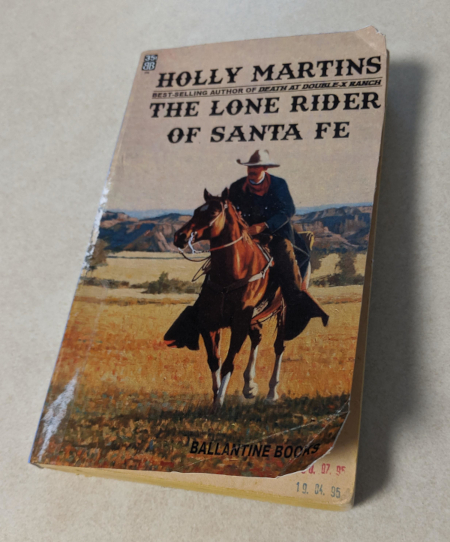 Hardware: The Definitive SF Works of Chris Foss, mostly by Chris Foss (the art), but edited and with some text by Rian Hughes and Imogene Foss; forwards by Mœbius and Alejandro Jodorowsky. I had some British pulp SF books with beautiful covers by Foss, which obviously had nothing to do with the books’ content. Foss’s impact on the visuals for Jodorowsky’s Dune is one of the many reasons I wish this movie would eventually be produced. The Icelandic Sagas, Folio Society edition in two volumes, edited and introduced by Magnus Magnusson. Alas, I was defeated: after reading about a hundred pages, I realized there is no way I will be able to pull through the two-thousand-odd pages of the entire thing. Insufficiently captivating, at least for me.
| ||||||
 ©1997-2022 by Tal Cohen, all rights reserved. [About]
 I have heard more eve-of-battle speeches than most men and though the generals that made them, Cæsar and Antony especially, were remarkably fine platform orators, they were all too good soldiers to try any platform business on the troops. They spoke to them in a conversational way, they did not orate. What sort of speech did Cæsar make before the Battle of Pharsalia? Did he beg us to remember our wives and children and the sacred temples of Rome and the glories of our past campaigns? By God, he didn’t! He climbed up on the stump of a pine-tree with one of those monster-radishes in one hand and a lump of hard soldiers’ bread in the other, and joked, between mouthfuls. Not dainty jokes but the real stuff told with the straightest face: about how chaste Pompey’s life was compared with his own reprobate one. The things he did with that radish would have made an ox laugh. I remember one broad anecdote about how Pompey won his surname The Great---oh, that radish!---and another still worse one about how he himself had lost his hair in the Bazaar at Alexandria. I’d tell you them both now but for this boy here.